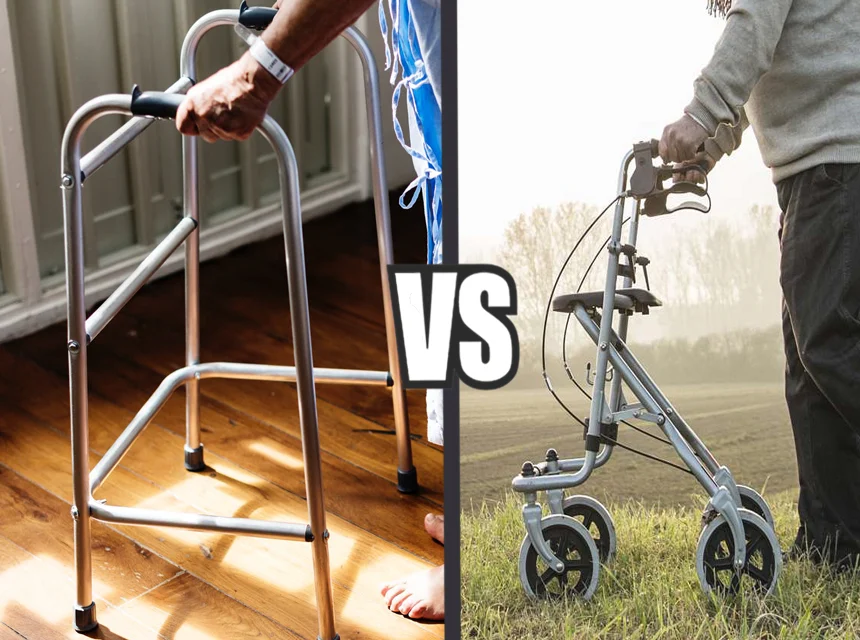
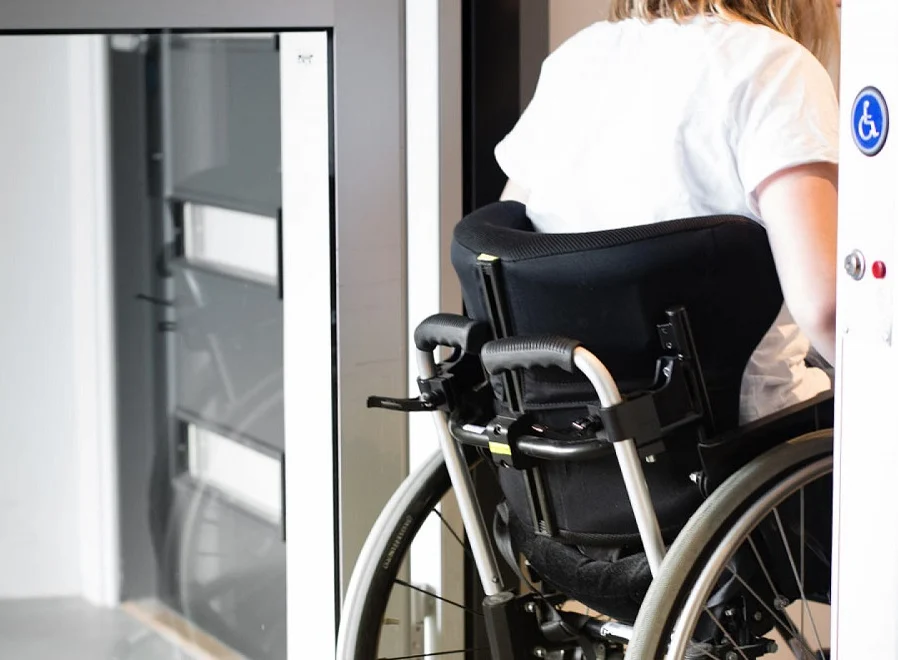
Most full-size walkers are in the mid-20-inch range when measured across their widest point, but there is no single standard width. Width is often overlooked, but it’s an important consideration when choosing walkers for seniors, especially for indoor use. Current folding walkers can be around 24 to 27 inches wide, while rollators, bariatric models and specialist narrow walkers vary further.
That makes the number on the individual product specification far more useful than a generic average. If the walker will be used indoors, measure the narrowest doorway and passage it needs to negotiate, then compare that with the model’s overall width rather than its seat width or the space between the handles.
By Ray Butcher, Senior Fitness Editor
SeniorFitness is reader-supported. We may earn a commission through products purchased using links on this page. Learn more about our process here
There Isn’t One Standard Walker Width
The old shorthand that a “standard walker” is always 25 to 29 inches wide is too simple. A current Drive folding walker is listed at 24 inches overall, while another adult folding walker from Medline is listed at 26 inches. Current rollators in a 2026 mobility-equipment catalogue include examples at 23, 25 and 26 inches overall.
That spread is why a quoted minimum or maximum for every walker is not especially helpful. A compact three-wheel design, a conventional front-wheeled frame, an upright walker and a heavy-duty bariatric walker are built differently. If you are still sorting out those categories, our guide to the different types of walkers is the better place to start.
Check Which Width the Manufacturer Means
Walker specifications often contain more than one width figure. They are not interchangeable, and this is where a lot of confusion starts.
| Measurement | What it tells you |
|---|---|
| Overall width | The widest outside dimension of the walker. This is the figure to compare with doors and narrow passages. |
| Width between handgrips | The space available for your body near the top of the frame. |
| Width between rear legs or wheels | The internal walking space lower down the frame. |
| Folded width | How compact the walker becomes for storage or transport, not how wide it is while being used. |
| Seat width | The usable seat dimension on a rollator; it does not tell you whether the frame will fit through a door. |
For doorway clearance, use the largest outside measurement when the walker is open and ready to walk with. If a product page only gives “width” without explaining where it was measured, check the manual or manufacturer specification before assuming it is the overall frame width.
Measure the Doorway, Not Just the Door
Open the door to the position it will normally be in when the walker passes through and measure the clear gap. With a hinged door, the usable opening can be narrower than the nominal door size because the door itself takes up some of the space.
As a useful reference, the U.S. Access Board’s ADA Standards require a minimum 32-inch clear opening for doors on an accessible route, measured with a swinging door open 90 degrees. That is an accessibility standard, not a promise that every doorway in an existing home will have 32 inches available. Older houses, bathrooms and internal doors can be tighter, which is why measuring the actual opening matters.
Do the same for hallways, turns beside furniture and the approach to the bathroom or bedroom. A walker that technically fits through a doorway can still be frustrating if there is no room to turn immediately afterward.
Narrow Walkers Can Be Much Smaller
Compact walkers are made specifically for homes where every inch counts. SeniorFitness’ current guide to narrow walkers for tight doorways includes full-size compact designs in the low-20-inch range as well as a specialist hemi-style walker that is much narrower. That is one reason a blanket “minimum walker width” is misleading: the narrowest specialist device is not necessarily comparable with a normal two-handed walker.
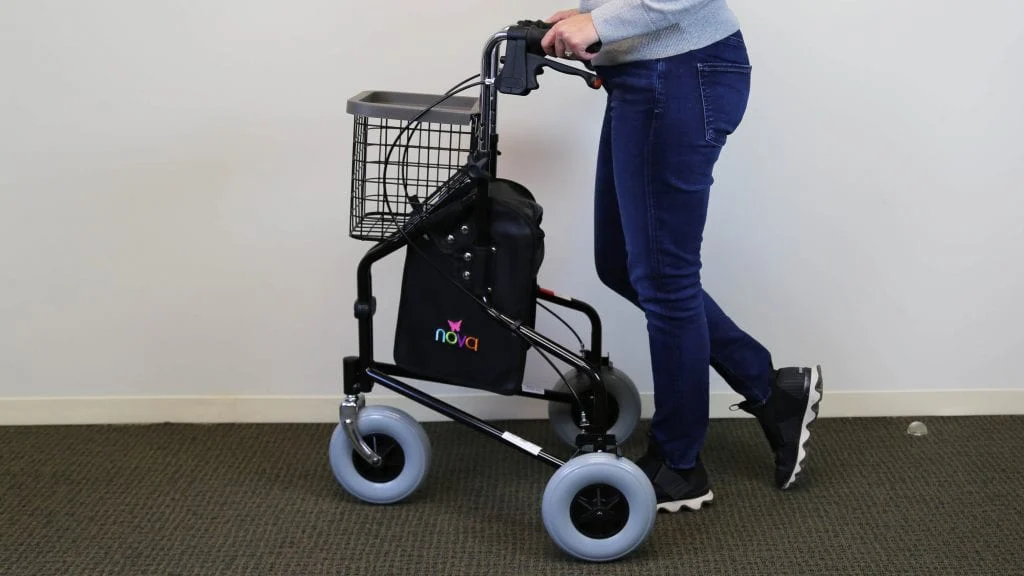
Three-wheel rollators can also be easier to steer through tight spaces because of their frame shape. The image below shows the sort of three-wheel layout people often consider when manoeuvrability is the priority.
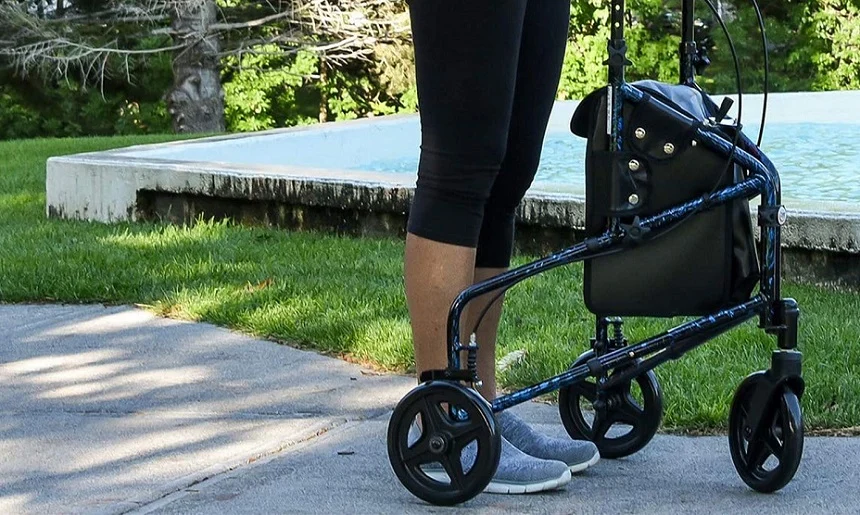
Our three-wheel walker guide looks at that format in more detail. A narrower footprint can be useful, but width should not be chosen at the expense of the stability and support you need.
Walker, Front-Wheeled Walker or Rollator?
The terminology matters because each design tends to occupy space differently. A traditional walking frame has four fixed legs. A front-wheeled walker usually has two wheels at the front and glides or tips at the rear. A rollator normally runs on three or four wheels and uses hand brakes.
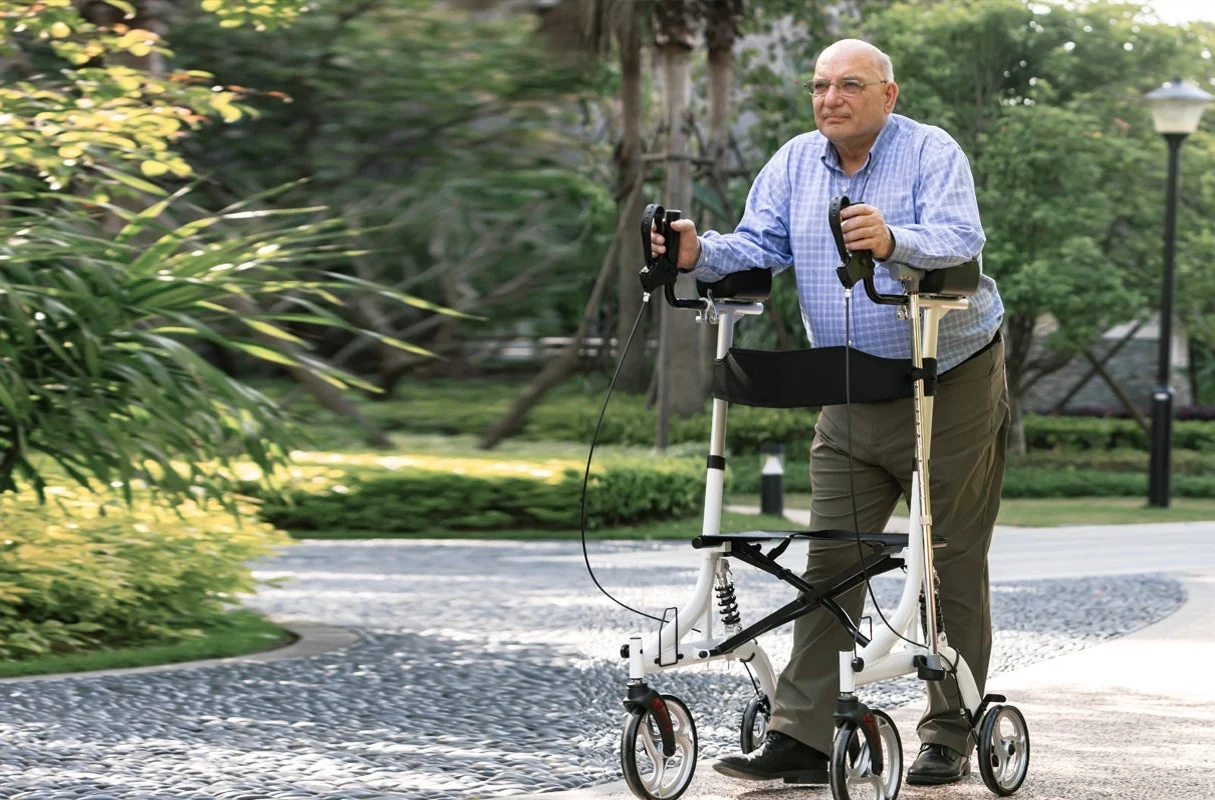
If you’re comparing those designs, our walker versus rollator explanation covers the practical differences. Upright designs deserve their own check as well: the arm-support frame can change both overall dimensions and the amount of room needed to turn, so compare measurements carefully if you’re considering an upright walker.
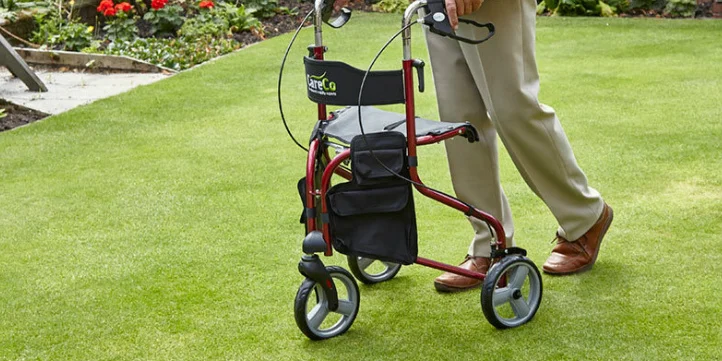
Outdoor-focused rollators often trade compactness for larger wheels, seating and storage. If rough paths are the reason for choosing one, our guide to rollators for rougher surfaces is more useful than choosing purely on frame width.
Why Model-Level Measurements Matter
Two folding walkers can look similar in a photo and still have different outside dimensions. The existing Health Line Stand-Assist Folding Walker and OasisSpace Compact Folding Walker are good examples of why it pays to check the current specification for the exact model rather than rely on the word “folding” or “compact.”
The same applies if you’re moving into higher-capacity or specialist equipment. A wider frame may be intentional, while a narrow frame may solve a doorway problem but not suit the user’s balance or body size. Width is one selection criterion, not the whole decision.
A Simple Rule Before You Buy
Measure the narrowest place the walker must pass, then find the exact model’s overall open width. Leave some practical clearance rather than choosing a frame that only just squeezes through on paper.
If space is only one of several concerns, the broader walker guide for seniors explains the main designs and sizing considerations. Once you know the type you need, the current walker comparisons can help narrow the field further.
For the doorway reference used above, see the U.S. Access Board guidance on accessible routes and door clear width.