Older adults often spend more time sitting than younger people, and replacing some of that sedentary time with movement can make an important contribution to healthy aging. The World Health Organization recommends regular physical activity for adults aged 65 and older and notes that some activity is better than none.
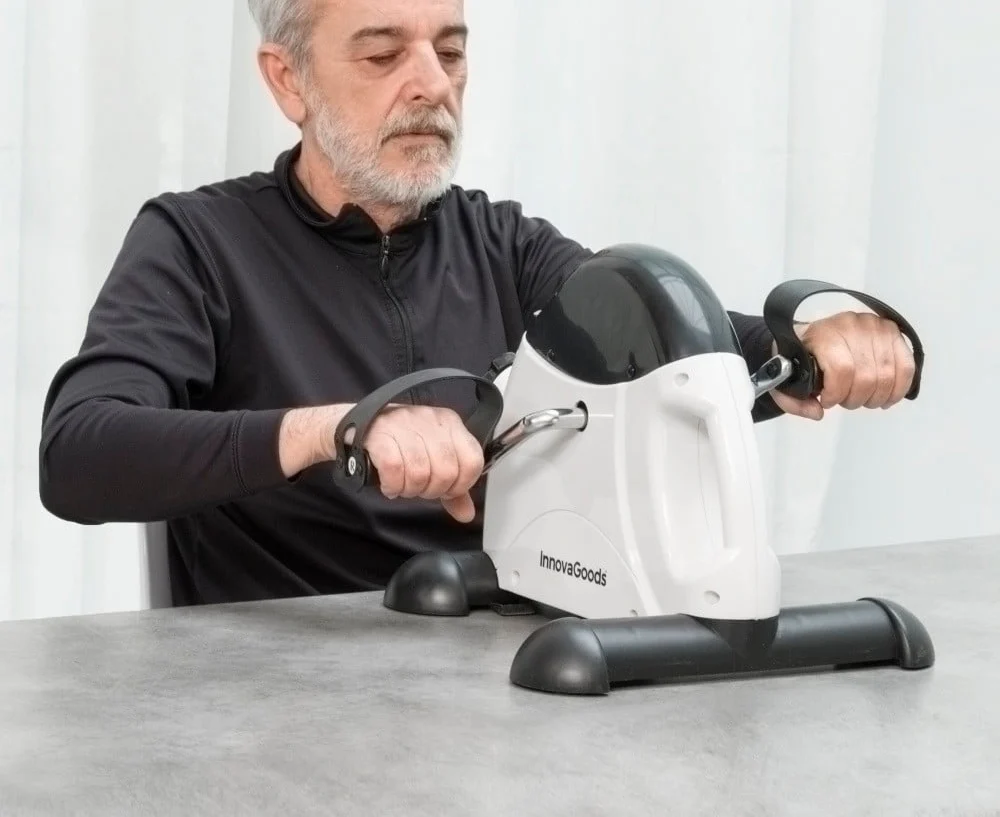
One of the easiest ways to add movement while sitting is with a pedal exerciser. These compact machines can be used from a stable chair while watching television, reading or working at a desk. Manual models can provide light aerobic and resistance exercise, while motorized models can provide gentle assisted movement for people looking for a lower-effort option. To complement seated pedaling, our comprehensive exercise plan for seniors at home covers strength, mobility and endurance.
For this 2026 update, we compared current product specifications, availability, usability, portability and recurring owner feedback across the leading pedal exercisers. Our Editor’s Choice is the YOSUDA Under Desk Bike Pedal Exerciser. Its magnetic resistance provides a smooth pedal action, while its heavier frame helps it remain more stable than many inexpensive portable pedalers.
SeniorFitness is reader-supported. We may earn a commission through products purchased using links on this page. Learn more about our process here
TL;DR: What Is the Best Pedal Exerciser for Seniors?
Pedal exercisers provide a simple, low-impact way to add movement while sitting. The best model depends on whether you want active exercise, assisted motorized movement, portability, an elliptical motion or upper-body exercise. For most seniors looking for an active workout, the YOSUDA Under Desk Bike is our top choice because of its smooth magnetic resistance, stable frame and straightforward controls.
For people wanting powered movement with less physical effort, the Nobol PhysioPedal Motorized Pedal Exerciser provides motorized forward/reverse operation and a remote control. At the budget end, the himaly Mini Exercise Bike provides a much simpler manual pedal mechanism at a low price. The main features to consider are manual vs motorized operation, resistance, stability, machine weight, pedal motion, controls and how easily the unit can be positioned from a chair.
Quick Summary
- Editor’s Choice – Best Overall: YOSUDA Under Desk Bike Pedal Exerciser — A substantial magnetic pedal exerciser with smooth adjustable resistance, LCD display and Bluetooth functionality. Its heavier frame gives it better floor stability than many lightweight budget pedalers.
- Best Motorized Pedal Exerciser: Nobol PhysioPedal Motorized Pedal Exerciser — A powered exerciser with remote control, adjustable speed and forward/reverse operation. A good choice where easy seated movement matters more than resistance training.
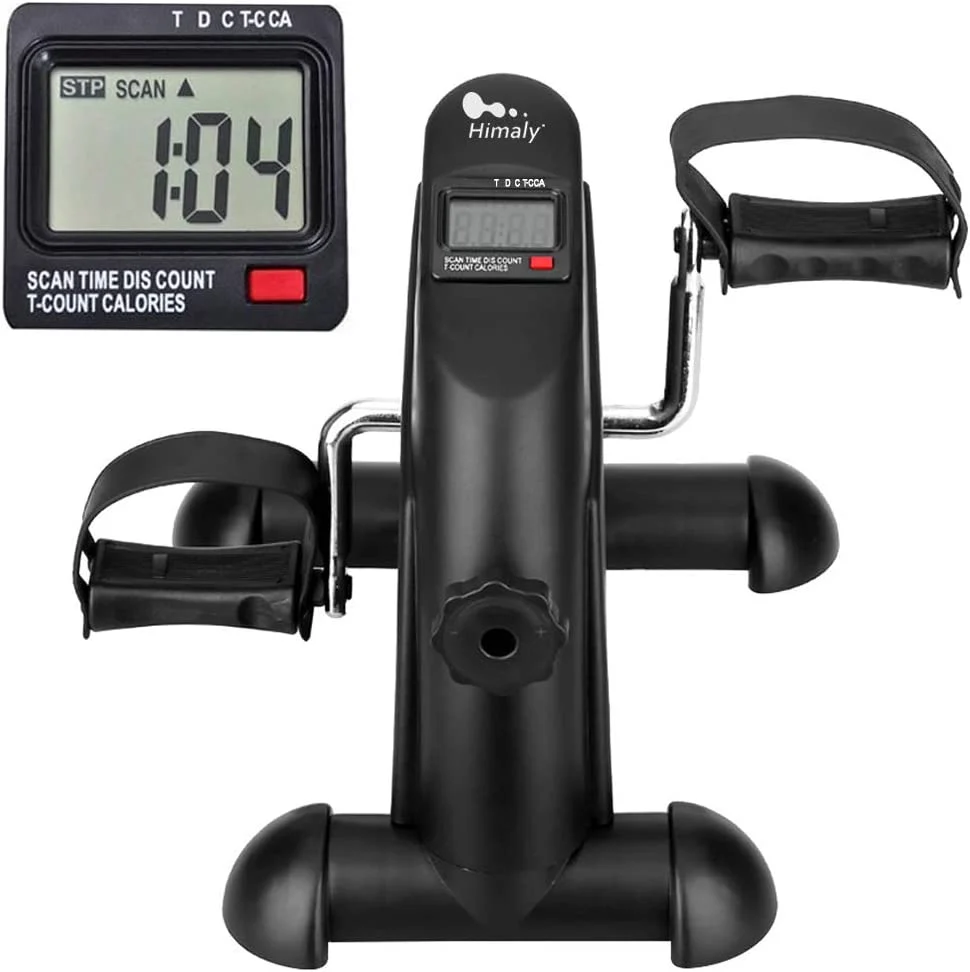
- Best Budget Manual Pedaler: himaly Mini Exercise Bike — Lightweight, inexpensive and straightforward. Adjustable friction resistance and an LCD display provide the essentials without the weight or cost of premium models.
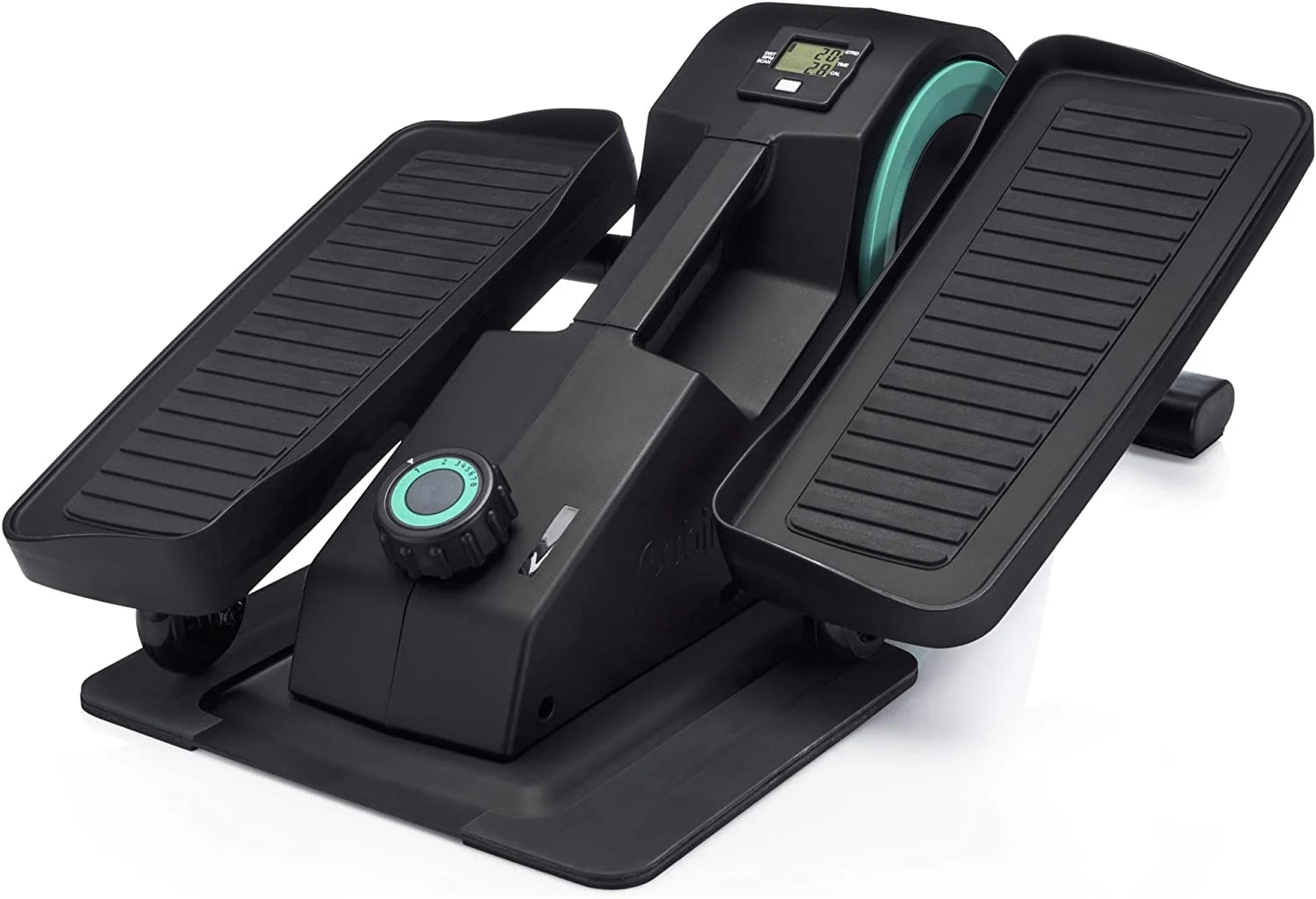
- Best Smooth Low-Impact Exerciser: Cubii JR1 Under Desk Elliptical — Uses a flatter elliptical stride rather than conventional bike-style rotation. Eight resistance levels, a low-profile frame and substantial weight give it a smooth, planted feel.
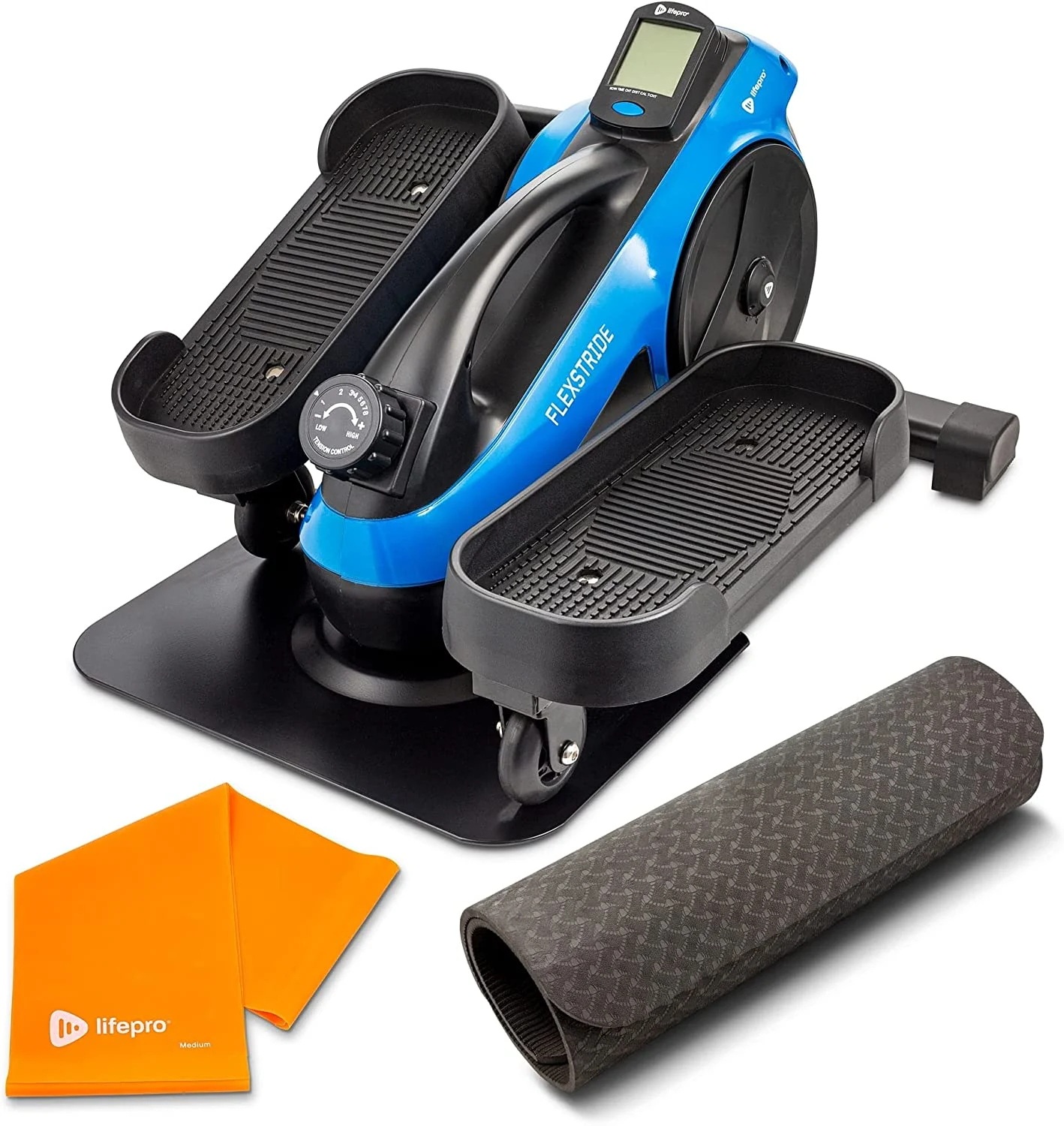
- Best for Stability & Accessories: LifePro FlexStride Plus — A substantial under-desk elliptical supplied with a mat, chair tether, wheel stoppers and resistance band, addressing one of the biggest problems with seated exercisers: unwanted movement.
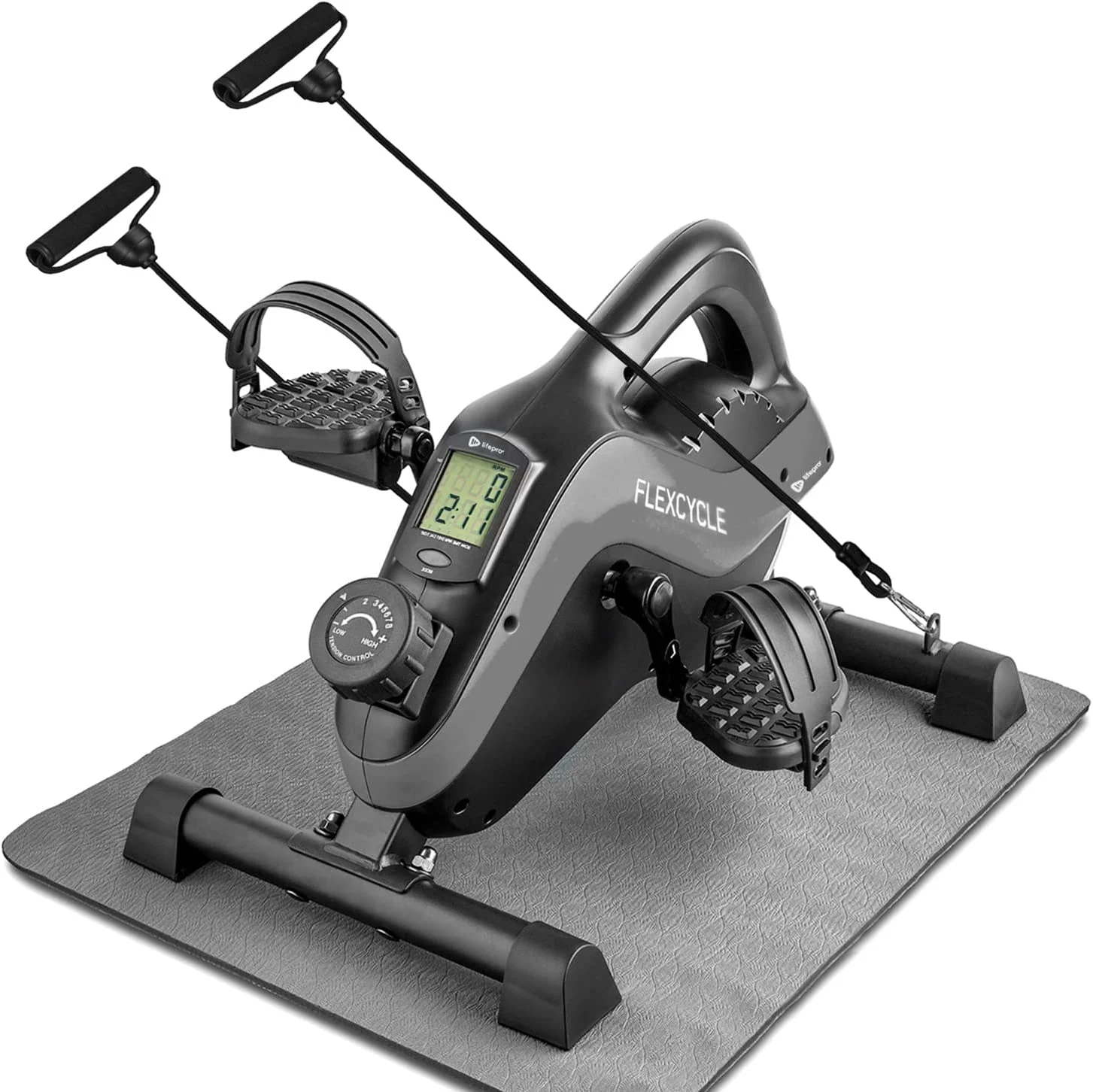
- Best for Arms & Legs: LifePro FlexCycle Plus — Combines conventional pedal exercise with upper-body options and resistance bands, making it the most versatile full-body option in our selection.
- Best Budget Motorized Exerciser: Under Desk Elliptical Machine Seated Pedal Exerciser — An inexpensive powered elliptical with remote operation and forward/reverse movement. It offers an affordable entry into motorized seated exercise but lacks the long-term track record of established brands.
Top 7 Pedal Exercisers for Seniors Review 2025
1. Editors Choice Pedal Exerciser for Seniors
Amazon
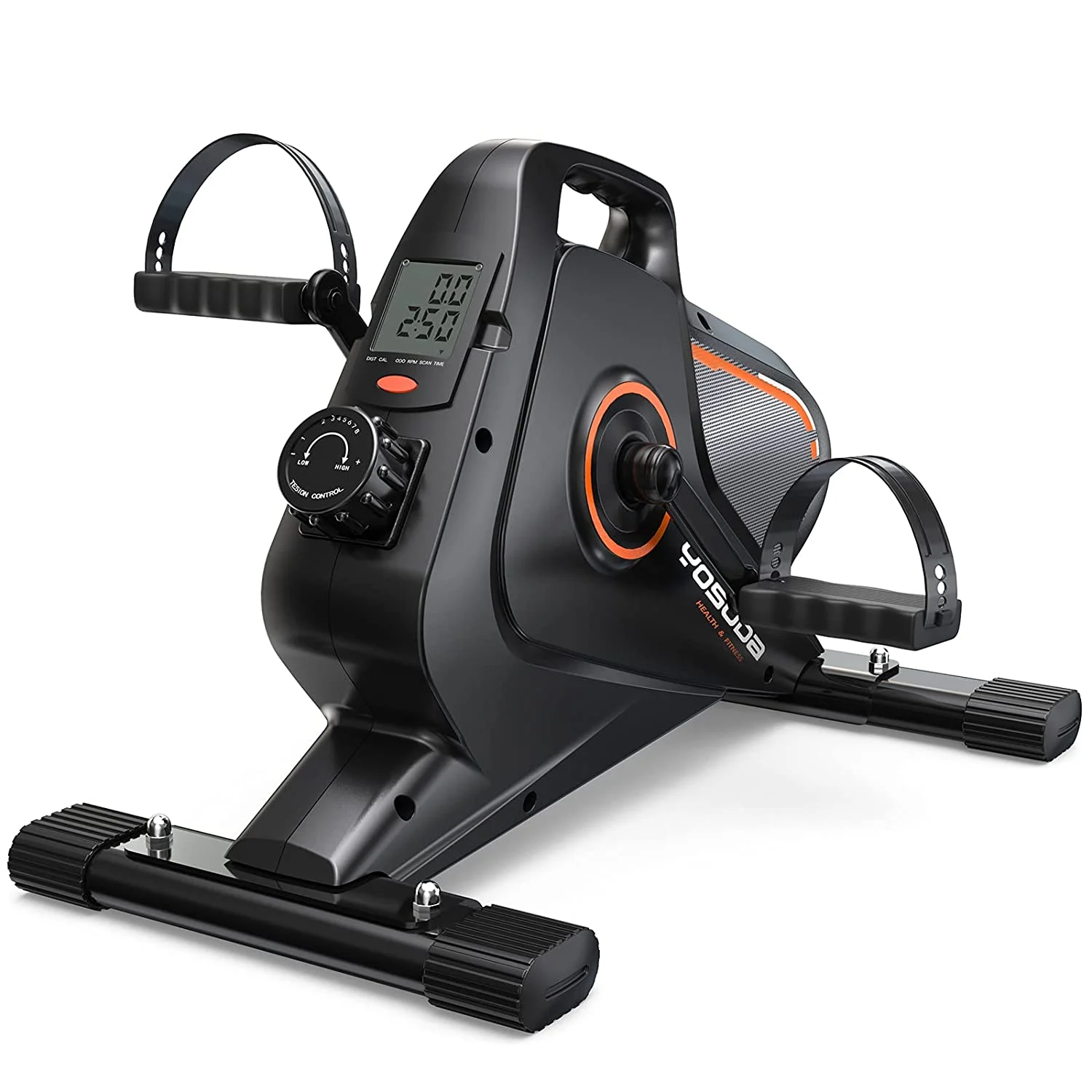
YOSUDA Bike Pedal Exerciser
Features
- Item weight: approximately 22 lbs
- Dimensions: approximately 19.7 x 17.7 x 13 in
- Resistance: magnetic, adjustable
- Operation: manual
- Material: alloy steel
- Maximum weight recommendation: 260 lbs
- Connectivity: Bluetooth/app support
- Warranty:1 year
More features: magnetic resistance; LCD display; arm and leg use; anti-slip base; quiet operation; compact under-desk design.
The YOSUDA Under Desk Bike remains our Editor’s Choice because it strikes one of the best balances between smooth resistance, stability and ease of use. Unlike the very lightweight pedal frames at the cheaper end of the market, the 22-pound YOSUDA has enough mass to feel planted while you pedal without becoming excessively difficult to move around the home. Amazon currently lists the unit at approximately 19.7 x 17.7 x 13 inches with an alloy-steel frame.
The magnetic resistance is the biggest reason we prefer it over a basic friction pedaler. The pedal stroke is smoother and quieter, making it much easier to use while watching television, reading or working at a desk. The current Amazon version also adds Bluetooth connectivity, which gives users who enjoy tracking their activity another reason to choose it over a simpler mini bike.
What stands out?
The standout feature is how substantial the YOSUDA feels compared with budget pedal exercisers. That extra weight helps keep it settled on the floor, and the magnetic system gives the pedal movement a smoother feel than the simple tension straps used on inexpensive mini bikes.
We also like that this is still a genuinely active exerciser. You’re providing the effort rather than having a motor move your legs for you, so the resistance can be increased as strength and endurance improve. The display and Bluetooth functionality are useful extras without making the machine difficult to operate.
What cons did we manage to find?
At 22 pounds, this isn’t the model we’d choose if the exerciser needs to be picked up and stored several times a day. A smaller manual pedaler such as the himaly is substantially easier to carry. The display is also mounted low on the machine, as with most under-desk bikes, so someone with limited mobility may still need to lean forward to read or reset it. It was also a bit of a challenge to fit the pedals, but some elbow grease cert
2. Best Motorizse Pedal Exerciser
Amazon
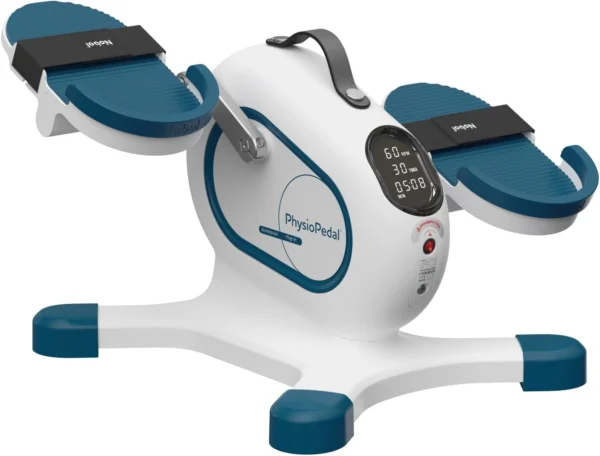
PhysioPedal Motorized Under Desk Excercise Bike
Features
- Operation: motorized
- Controls: remote and onboard controls
- Direction: forward and reverse
- Use: legs or arms
- Display: LED
- Speed: adjustable
- Resistance: adjustable
More features: seated operation; remote adjustment; bidirectional rotation; tabletop arm use; portable design.
The Nobol PhysioPedal replaces the old ROTAI as our preferred motorized exerciser. Amazon currently identifies the product as the Nobol PhysioPedal Motorized Under Desk Exercise Bike, with remote operation, adjustable speed and resistance, an LED display, and both leg and arm use.
This is a fundamentally different product from the YOSUDA or himaly. Rather than relying entirely on the user to turn the pedals, the electric motor can move them automatically. That makes it particularly interesting for someone looking for gentle seated movement rather than a traditional resistance workout.
The ability to change settings using a remote is also genuinely useful for older users. With most pedal machines, the controls sit almost at floor level. Here, speed and operation can be altered without repeatedly leaning forward.
What stands out?
The remote control is probably the strongest senior-friendly feature. It means the exerciser can be positioned comfortably before starting, with fewer reasons to bend down once the session is underway. We also like the forward and reverse rotation.
What cons did we manage to find?
A motorized exerciser isn’t automatically better than a manual one. If the goal is to actively build leg strength or cardiovascular fitness, we’d generally choose something like the YOSUDA or Cubii where the user must provide the effort. And because it needs power for the motorized functions, placement is less flexible than a completely manual pedaler.
3. Best Budget Manual Pedal Exerciser
Amazon
Himaly Mini Exercise Bike
Features
- Max. Weight Capacity:not specified
- Dimensions:16.54×12.6×7.87 inch.
- Item Weight:8.8 lbs.
- Warranty:2 years
More features: LCD display, anti-slip brackets, non-slip pedals, adjustable pedal resistance
Looking for a way to stay active and fit, without having to leave the comfort of your own home? Look no further than the Himalay Mini Exercise Bike. This affordable and easy-to-use bike is perfect for seniors who want to stay physically active without putting too much strain on their joints. The bike’s LCD display makes it easy to track your progress, while the adjustable pedal resistance lets you customize your workout to your own fitness level. Non-slip pedals and anti-slip brackets keep you safe and secure while you exercise, so you can focus on getting a great workout. Get the Himalay Mini Exercise Bike today and start pedaling your way to better health!
This exerciser is recommended to be used for your legs in a pedal motion but also for arm exercises as well. However, in terms of those arm exercises, it simply doesn’t compare to the LifePro FlexCycle, which stands for the Best for Arms & Legs Workout, including attached resistance bands. That’s one simple way to take your workout to the next level and do it all at one time.
What do we love it for?
- Adjustable multi-level resistance
- Ideal for arms and legs exercising
- Digital LCD display shows all measurements
- Lightweight and portable
- Low price
- Non-slip bike foot
- Easy to assemble
What were we disappointed with?
- It slips on carpets
4. Best Low Impact Pedal Exerciser
Amazon
Cubii JR1
Features
- Overall dimensions:23.15 x 17.56 x 10 in
- Weight:29.6 lbs
- Resistance levels:8
- Warranty:30-day limited
More features: 250 lbs weight capacity, LCD screen, Cubii Communitii access, wheel stoppers included
At first glance, you can tell that the Cubii JR1 leg exerciser is a premium fitness tool. It boasts a classy black and blue design that will keep anyone addicted to it. Beyond this device’s look, it features a built-in LCD that lets you keep track of your fitness progress. This display shows calories burned, distance traveled, strides pedaled, and more. Furthermore, this leg exerciser has wheel stoppers to keep your fitness tool from skidding. These features ensure that you have a comfortable experience using the device.
Moreover, the Cubii JR1 leg exerciser beats the SITFIT Sit Down and Cycle exerciser in terms of resistance options. While the Cubii leg exerciser offers eight resistance levels, the SITFIT leg exerciser offers only five. So, if you’re looking for an upgrade, the former is suitable, although it’s more expensive. Also, the Cubii exerciser does not slide around like the SITFIT exerciser, thanks to its wheel stoppers. The former also has the edge with access to the Cubii mobile app, which helps to keep your fitness data. However, the Cubii exerciser’s 30-day limited warranty is inferior to the SITFIT exerciser’s 90-day warranty.
Why did it make our list?
- Eight resistance levels offer varying exercise options
- LCD helps to track fitness progress in real-time
- The Cubii mobile app keeps fitness data secure for a long time
- Wheel stoppers ensure stable exercise sessions
- It can accommodate up to 250 lbs
What is not ideal about it?
- It squeaks, which can be frustrating if it is used in a quiet house.
5. Best Stability & Accessories Pedal Exerciser
Amazon
LifePro Bike Pedal Exerciser
Features
- Weight Capacity:221 lbs.
- Dimensions:22.7×18.5×12.9 inch.
- Item Weight:30.8 lbs.
- Warranty:lifetime
More features: inside mounting, closer rungs, lightweight.
f you want 5% off, use our link to go directly to LifePro website applicable across their range of products!
The LifePro Bike Pedal Exerciser is a great way to stay active and improve your health, at any age! This exercise bike is perfect for seniors, with a max. weight capacity of 220 lbs, and features 8 resistance levels to customize the workout. It also comes with a lifetime warranty, so you can be confident in its quality. The LCD monitor tracks your progress and the built-in casters make it easy to move around your home. The included floor mat protects your floors from scratches, and the tether strap keeps the bike in place while you workout. Order your LifePro Bike Pedal Exerciser today and start feeling better tomorrow!
This particular option can certainly give the best value pick a run for its money. Don’t get us wrong, the Best Value is still a great value from the Himaly brand. However, this machine stands out in two major areas. First, it comes with some really great accessories for setup and the workout. Secondly, it supports your feet on an advanced level.
What are its best features?
- Comes with useful accessories
- Lifetime warranty
- 8 tension levels
- Bluetooth to connect with your phone and track your activity
What could be improved?
- Pretty heavy
6. Best Arms & Legs Pedal Exerciser
Amazon
LifePro FlexCycle Exercise Bike
Features
- Weight Capacity:not specified
- Dimensions:20.9×17.5×13.2 inch.
- Item Weight:18.1 lbs.
- Warranty:lifetime
More features: 8 resistance levels, LCD monitor, free APP integration, included resistance bands
If you want 5% off, use our link to go directly to LifePro website applicable across their range of products!
The LifePro FlexCycle is the perfect way to get a workout at home, on your own time. This bike features 8 levels of resistance, so you can tailor your workout to your own fitness level. The included LCD monitor tracks your progress and displays your heart rate, so you can see how hard you’re working. The free APP integration lets you use your favorite fitness apps with the bike, for even more motivation. The resistance bands are ideal for both arms and legs workouts, and the bike has a max weight capacity of not specified, making it perfect for seniors. With a lifetime warranty, the LifePro FlexCycle is an outstanding value.
You will find that this LifePro choice compares easily to the LifePro under desk model that we shared as the Best Accessories choice. However, if you’re looking for the total workout with one convenient piece of equipment, this one takes the cake. The resistance bands are actually built into the machine so there are no extra parts to contend with for your workout needs.
Why did it make our list?
- Perfect for legs and arms exercising
- 2 pedal types (for arms and foot)
- User-friendly LCD
- Comes with a non-slip mat
- Free app for tracking your workout progress
- Lifetime warranty
What is not ideal about it?
- Some buyers note that it makes periodic knocking noise when pedaling forward with time
7. Best Budget Pedal Exerciser

Amazon
Under Desk Elliptical Machine Seated Pedal Exerciser
Features
- Operation: motorized
- Modes: manual and automatic
- Speed: adjustable
- Direction: forward and reverse
- Remote control: included
- Display: built-in digital display
- Use position: seated
More features: low-profile elliptical movement; remote adjustment; forward/reverse motion; compact design; budget pricing.
This Under Desk Elliptical Machine Seated Pedal Exerciser earns its place because it provides the basic features people want from a motorized seated exerciser at a much lower price than established premium brands. This one is more of a generic Amazon brand cheapy that wont break the bank, but if you are looking for the lowest entry point into trying a pedal excerciser, then this one certainly did the job when we tested it…. but for how long we don’t know.
What are its best features?
The biggest advantage is simply the price of entry into a motorized exerciser. If you’re curious about powered seated movement but don’t want to immediately spend significantly more on an established premium model, this makes the concept much easier to try.
The remote is also important. Being able to start, stop or change settings without leaning down toward the floor is precisely the type of convenience that makes a motorized exerciser attractive to older users.The elliptical pedal pattern is another positive, providing a flatter movement than a traditional mini exercise bike.
What could be improved?
This is the model where we’d be most cautious about long-term ownership. We would also treat specifications and marketing claims cautiously until the listing develops a longer history. If long-term support matters more than initial price, we’d spend extra on one of the more established brands.
For that reason, our recommendation is straightforward: buy this to see if you will use the equipment, not because you expect premium build quality or support.
How to Choose the Best Pedal Exerciser for Seniors
When choosing a pedal exerciser, the most important thing is to match the machine to the way it will actually be used. Some seniors want a compact device for active daily exercise, while others are looking for gentle assisted movement, easy portability or a machine that can stay permanently beside a favorite chair. Pedal exercisers can be useful for adding seated movement, but they should be viewed as one part of a broader activity routine rather than a complete fitness program. Our low-impact cardio plan for seniors provides additional ideas for building general fitness and endurance.
Manual vs Motorized Pedal Exercisers
The first decision is whether you want a manual or motorized pedal exerciser, because these two designs serve quite different purposes. A manual model such as the YOSUDA Under Desk Bike, himaly Mini Exercise Bike or LifePro FlexCycle Plus requires the user to turn the pedals and work against the resistance themselves. This makes manual machines more appropriate when the goal is active exercise, improving endurance or gradually adding more muscular effort.
A motorized model such as the Nobol PhysioPedal works differently because an electric motor drives the pedals. This can be useful for someone primarily looking for gentle assisted movement rather than a conventional resistance workout, and the remote control also removes the need to bend toward the floor to make adjustments. The two styles should not be treated as interchangeable, particularly if the exerciser is being used as part of rehabilitation following surgery or injury, where the exercise plan should follow professional advice. For a broader comparison of active, motorized and passive formats, see our guide to leg exercisers for seniors.
Portable Pedal Exercisers for Seniors: Size & Weight
Size and weight matter most when the machine will be moved regularly rather than left permanently in one location. A lightweight exerciser such as the himaly Mini Exercise Bike, at around 8 pounds, is much easier to carry between rooms or put into a cupboard after use. Heavier products require more effort to move, but that extra weight often helps them remain more stable while pedaling.
This is why a model such as the YOSUDA Under Desk Bike, at roughly 22 pounds, can feel more secure on the floor even though it is less convenient to carry. The Cubii and LifePro ellipticals are heavier again and make the most sense when they can remain near a regular exercise chair or desk. If you intend to use the exerciser underneath a desk, also measure the available clearance because both the height of the machine and the amount your knees rise during each pedal stroke can affect whether it fits comfortably.
Stability
Stability is more important than many of the headline specifications used to market pedal exercisers. Unlike a conventional exercise bike, the user’s body weight is supported by the chair rather than the exerciser itself, so a large advertised “user weight capacity” is not especially useful when comparing these machines. A better indication of stability comes from the machine’s overall weight, base width, rubber feet and whether it includes accessories designed to stop the exerciser or chair from moving.
Very lightweight pedalers can creep forward on smooth floors, particularly when the user pedals with more force. A non-slip mat can help considerably, while chair tethers and wheel stops are useful if the chair itself tends to move backward. This is one reason the LifePro FlexStride Plus stands out, as its accessory package includes a mat, tether and chair-wheel stoppers that directly address common stability problems.
Noise and Resistance
Noise becomes important when the exerciser will be used while watching television, talking to someone or working at a desk. Models with magnetic resistance, such as the YOSUDA Under Desk Bike, generally provide a smoother and quieter feel than inexpensive friction-based systems because resistance is created without the same level of physical contact. Cheaper manual pedalers such as the himaly use simpler adjustable friction resistance, which keeps the product light and inexpensive but tends to feel less refined.
Resistance should also match the user’s fitness level rather than simply having the largest number of settings. A useful pedal exerciser should allow someone to begin at a comfortable level and gradually increase the effort as strength and endurance improve. Motorized models operate differently again, because their main adjustment is usually pedal speed rather than resistance, so the slowest settings are particularly important for someone who wants gentle assisted movement.
Pedal vs Elliptical Motion
Not every pedal exerciser uses the same style of movement. Traditional mini bikes such as the YOSUDA, himaly and FlexCycle move the feet through a circular cycling motion, while products such as the Cubii JR1 and LifePro FlexStride Plus use a flatter elliptical stride. The difference can become especially noticeable when the machine is used underneath a desk, where excessive vertical knee movement can lead to the knees striking the underside.
An elliptical motion is therefore worth considering when under-desk clearance is limited or when the user simply prefers the flatter movement pattern. Traditional pedalers may feel more familiar to anyone accustomed to cycling and can also provide a more obvious resistance-training feel. Neither approach is universally better, so comfort, available space and intended use should determine the choice.
Pedal Exercisers With Simple Displays & Controls
A good display should make the machine easier to use rather than becoming another feature that needs to be deciphered. Most pedal exercisers show information such as workout time, pedal count, RPM or speed, distance and estimated calories, although the calorie figure should be treated as a rough estimate rather than a precise measurement. Larger numbers and simple controls are generally more useful than having a long list of functions.
The location of the controls also matters because most displays are positioned close to floor level. Someone with limited mobility may find repeatedly leaning forward to change settings uncomfortable, which is where remote-controlled motorized machines can have a practical advantage. The Nobol PhysioPedal, for example, allows the user to change operation without constantly reaching toward the machine itself.
Bluetooth and App Connectivity
Bluetooth connectivity can be useful for people who enjoy tracking workouts over time, but it should usually be treated as a bonus rather than a reason to choose one machine over another. The current YOSUDA and some LifePro models offer connected features that can make it easier to record exercise sessions. For many seniors, however, a straightforward LCD showing time and pedal count will be more useful than another mobile app.
It is also worth checking exactly what the app functionality does, because not every product works in the same way. The Cubii JR1, for example, has access to Cubii’s app ecosystem, but the standard JR1 does not automatically transmit workout data by Bluetooth. Its exercise information can instead be entered manually if the user wants to maintain a digital record.
Accessories
Accessories can make a bigger difference than they initially appear to, especially when they improve stability or broaden the types of exercise available. Non-slip mats, chair tethers and wheel stoppers can help prevent movement during use, while adjustable foot straps can help keep the feet positioned correctly on the pedals. These are practical additions rather than purely cosmetic extras.
The LifePro FlexStride Plus has one of the strongest accessory packages because it includes several items aimed specifically at keeping the exerciser and chair in position. The LifePro FlexCycle Plus takes a different approach by adding resistance bands, which makes it more useful for someone who wants to include upper-body exercise as part of the same session.
Pedal Design
Pedal design is easy to overlook, but it can affect both comfort and confidence while exercising. Adjustable foot straps are particularly useful because they help stop the feet moving out of position, especially for seniors with smaller feet or reduced control. The pedals should also be large enough to feel secure without forcing the ankles into an uncomfortable position.
If upper-body exercise is part of the plan, check whether the machine is actually designed for arm use rather than assuming that any foot pedal will also work comfortably in the hands. A unit used on a tabletop needs to remain stable, and the pedal shape should be suitable for gripping. The LifePro FlexCycle Plus is our preferred choice where both arm and leg exercise are priorities because that versatility is built into the design.
Warranty and Support
Warranty and after-sales support become more important as the product becomes more complicated. A basic manual pedaler contains relatively few moving parts, while magnetic, Bluetooth-enabled and motorized machines have more components that may require repair or replacement over time. Established brands can therefore have an advantage even when the initial purchase price is higher.
LifePro and Cubii, for example, maintain product manuals, support resources and established customer-service channels. The inexpensive B0H3DD73P6 Under Desk Elliptical costs less upfront, but it does not currently have the same long-term product history or support network. That does not make it a poor choice, but it is a trade-off worth considering if you expect the machine to be used regularly for several years.
Why Seniors May Benefit From Using a Pedal Exerciser
Pedal exercisers provide a convenient way to add movement during periods that might otherwise be spent sitting. They are particularly appealing because the user can exercise from a chair without needing a large piece of fitness equipment or a trip to the gym. They should not replace walking, strength training or balance exercise where those activities are appropriate, but they can form a useful part of a broader routine. For a more complete seated workout, our chair exercises for seniors add strength and mobility movements beyond pedaling.
Low-Impact Seated Exercise
Pedaling is a low-impact form of movement because the user remains seated and does not repeatedly strike the ground as they would during running or jumping. With a manual exerciser, increasing the resistance and duration can gradually increase the amount of muscular and cardiovascular effort required. This makes a pedal exerciser useful for someone who wants a gentler way to introduce more activity into the day.
The National Institute on Aging recommends that older adults include a mixture of aerobic, muscle-strengthening and balance activities where appropriate. A pedal exerciser can contribute to the aerobic and muscular parts of that routine, but it should not be expected to provide all of them on its own. The intensity also depends heavily on how much effort the user actually puts into the pedals.
Reducing Sedentary Time
One of the simplest advantages of a pedal exerciser is that it can turn otherwise sedentary time into periods of light movement. Someone watching television, reading or sitting at a desk can pedal gently rather than remaining completely still for the entire period. This makes the equipment particularly useful for people who struggle to schedule a separate formal workout.
Research into sedentary behavior and healthy aging has found associations between spending less time sedentary, performing more physical activity and better healthy-aging outcomes. That does not mean a pedal exerciser itself guarantees those outcomes, but it can provide one practical method of replacing some inactive time with movement. Our leg circulation exercises for older adults provide additional ideas for keeping the legs moving during the day.
Gentle Movement for Joints
Cycling-style movement is generally considered low impact because the feet remain supported by the pedals and the joints move through a controlled range. This can make pedal exercise more comfortable than activities involving repeated impact for some people with arthritis or joint discomfort. Regular physical activity can also help improve physical function and reduce symptoms for many people with arthritis when the exercise is appropriate for their condition.
That does not mean every person with knee or hip pain should automatically use a pedal exerciser. The correct movement, resistance and range of motion depend on the cause and severity of the problem, and exercise should not be forced through pain. Anyone recovering from joint replacement or another procedure should follow the rehabilitation program provided by their surgeon or physical therapist.
Maintaining Leg Activity
Active pedaling mainly uses the quadriceps and hamstrings, with additional involvement from the calves and muscles around the hips. Increasing the resistance requires those muscles to work harder, which is why a manual pedal exerciser can provide some light strengthening effect alongside aerobic movement. Regular activity can therefore help keep the legs working rather than allowing long periods of complete inactivity.
A pedal exerciser is not a substitute for a comprehensive resistance-training program, particularly where maintaining or increasing muscle strength is the main goal. It can, however, provide another source of repeated low-to-moderate muscular activity throughout the week. Models such as the LifePro FlexCycle Plus also add resistance bands and arm-exercise options for people wanting more variety.
Convenient Home Exercise
Convenience is one of the biggest reasons pedal exercisers work well for many older adults. There is no need to travel to a gym, wait for good weather or dedicate a large area of the home to exercise equipment. A compact unit can be positioned near a chair and used for a short session whenever it suits the user.
This flexibility also makes it easier to divide exercise into smaller periods rather than relying on one long workout. Someone might pedal for a few minutes while watching the morning news and use the machine again later in the day. For people who find structured exercise intimidating or inconvenient, this can make regular movement easier to maintain.
Supporting a Broader Active Lifestyle
The greatest benefit comes when a pedal exerciser forms part of a wider active lifestyle rather than becoming the only form of exercise. Physical activity can support physical function and make everyday activities easier, which is especially important as people age. Regular movement can also help older adults maintain greater independence when combined with appropriate strength, mobility and balance work.
WHO guidance for older adults includes aerobic exercise, muscle-strengthening activity and functional balance training. A pedal exerciser can contribute to the aerobic component and provide some muscular work, but activities such as walking, resistance exercise and balance training may still be needed. For more variety, see our indoor activity ideas for seniors, along with our guides to the best walking canes, best 3-wheel walkers and best upright walkers for seniors.
How to Use a Pedal Exerciser Safely and Effectively
Start by placing the pedal exerciser in front of a stable chair that will not roll or slide, and position yourself far enough away that the legs can move comfortably without fully locking the knees at the furthest point of the pedal stroke. Secure the feet using the pedal straps where supplied and make sure the machine is sitting flat on the floor before beginning. If either the chair or exerciser tends to move, use the manufacturer’s mat, tether or wheel stops where available.
Begin with low resistance on a manual machine or a slow speed on a motorized model. The first few sessions can be short while you become familiar with the movement, and the duration or resistance can then be increased gradually if it remains comfortable. Pedal smoothly rather than driving down heavily on each stroke, because aggressive downward force can make lightweight machines move across the floor.
With a motorized exerciser, make sure you understand how to stop the machine before starting and keep the remote within easy reach. Stop exercising if you experience unusual pain, dizziness, chest discomfort or significant shortness of breath rather than attempting to push through the symptoms. People with health conditions that affect their ability to exercise should discuss suitable activity with an appropriate healthcare professional.
Pedal Exerciser FAQ
What Muscles Does a Pedal Exerciser Work?
When used actively with the legs, a pedal exerciser mainly works the quadriceps and hamstrings, while the calves and muscles around the hips also contribute to the movement. The amount of muscular work increases as resistance rises, so an easy session and a higher-resistance workout can feel quite different even on the same machine. Regular pedaling can therefore provide light muscular activity as well as seated aerobic movement.
Some pedal exercisers can also be used for upper-body exercise. Depending on the design, arm pedaling can involve the shoulders, biceps, triceps and forearms, while resistance bands can provide additional upper-body options. The LifePro FlexCycle Plus is our preferred model where both upper- and lower-body exercise are priorities.
How Often Should Seniors Use a Pedal Exerciser?
There is no single pedal-exerciser schedule that is appropriate for every senior. WHO recommends that adults aged 65 and older aim for at least 150 minutes of moderate-intensity aerobic activity per week, alongside appropriate strength and balance activity, but casual pedaling will not necessarily reach moderate intensity. The amount of time therefore needs to be considered alongside how hard the person is actually working.
A beginner might start with a comfortable session of around 5–10 minutes and gradually build from there, while someone who already exercises regularly may comfortably pedal for much longer. Breaking activity into shorter sessions can also make it easier to maintain throughout the week. The important consideration is how pedal exercise contributes to the person’s overall activity level rather than trying to meet an arbitrary daily pedaling target.
How Do I Pick the Right Size Pedal Exerciser?
The best size depends largely on where the machine will be used. Under a desk, overall machine height and knee clearance become particularly important because the legs rise with each stroke. A low-profile elliptical such as the Cubii JR1 can work well where space under the desk is limited.
In front of an armchair or dining chair, the overall footprint and machine weight may matter more. A lightweight product such as the himaly Mini Exercise Bike is easier to move and store, while a heavier Cubii or LifePro machine is likely to remain more planted during use. Before buying, consider both the available space and whether the intended user can comfortably move the unit when required.
Is a Pedal Exerciser Good for Someone With Knee Pain or Arthritis?
A pedal exerciser can be appropriate for some people with knee pain or arthritis because cycling-style movement is low impact and does not require the knees to support full body weight. Gentle movement can help maintain range of motion, while increasing resistance may strengthen some of the muscles supporting the joint. However, the suitability of pedaling depends on the cause of the pain and the individual’s mobility.
Start at a low resistance and a comfortable range of movement rather than forcing the knee through pain. If symptoms increase during or after exercise, stop and seek appropriate advice before continuing. Anyone who has recently had knee or hip surgery should follow the exercise program provided by their surgeon or rehabilitation team rather than relying on general pedal-exerciser recommendations.
Is a Motorized Pedal Exerciser Better Than a Manual One?
Neither design is automatically better because they are intended for different uses. A manual pedal exerciser requires the user to create the movement, making it more appropriate when the goal is active exercise and gradually increasing effort. Resistance can usually be adjusted to make the session easier or more challenging.
A motorized pedal exerciser drives the movement electrically, making it useful for someone who wants gentle assisted motion with less physical effort. The Nobol PhysioPedal is our preferred powered model, while the YOSUDA Under Desk Bike is our preferred active manual exerciser. Where motorized movement is being used for rehabilitation, the appropriate speed, duration and range should follow professional guidance.
How Do I Stop My Pedal Exerciser From Sliding?
Sliding usually happens because either the pedal unit moves forward or the chair moves backward as force is applied to the pedals. A non-slip mat can significantly improve grip on smooth surfaces such as tile or timber, while keeping the rubber feet clean can also help them maintain contact with the floor. Using a stable dining or armchair rather than a rolling office chair removes another common source of movement.
Some exercisers provide more secure solutions through tethers or wheel stoppers. The LifePro FlexStride Plus, for example, includes a floor mat, tether and chair-wheel stoppers specifically for this purpose. Smooth circular pedaling rather than forceful downward strokes can also reduce movement, and any solution should avoid creating a new trip hazard around the chair or exerciser.
Our Verdict
Pedal exercisers can be a practical way for seniors to add more movement to periods of the day that might otherwise be spent sitting. Their biggest strengths are convenience, low-impact movement and the ability to exercise from a chair without dedicating a large area of the home to fitness equipment. The right model, however, depends heavily on whether the goal is active exercise, assisted movement, portability or smooth under-desk use.
For most people looking for an active pedal workout, the YOSUDA Under Desk Bike Pedal Exerciser remains our top recommendation. Its magnetic resistance, substantial frame and straightforward operation provide a strong balance between smooth exercise and everyday usability. For someone wanting powered movement instead, the Nobol PhysioPedal Motorized Pedal Exerciser provides motorized forward and reverse operation with the convenience of a remote control.
At the more affordable end, the himaly Mini Exercise Bike provides simple active pedaling without the cost or weight of premium models, while the Under Desk Elliptical Machine Seated Pedal Exerciser offers a cheaper entry into powered exercise. The Cubii JR1 is the better choice for someone who prefers a smooth, low-profile elliptical stride, and the LifePro FlexStride Plus stands out when stability and accessories are priorities.
The LifePro FlexCycle Plus remains the most versatile choice for anyone wanting to combine leg pedaling with upper-body exercise. Ultimately, the best pedal exerciser is the one that matches the user’s physical ability, intended exercise level and home environment. A manual resistance model makes the most sense for active exercise, while a motorized machine is better suited to assisted movement, and either type works best when it forms part of a broader routine that also includes appropriate strength, mobility and balance activity.
References
National Institute on Aging – “Exercising With Chronic Conditions.” Almost anyone, at any age, can do some type of physical activity, even with a health condition. In fact, physical activity may help – regular exercise can reduce arthritis pain and stiffness, help manage chronic conditions, and improve heart health. For most older adults, activities like brisk walking, biking, or gardening are safe, as long as you start slowly and build up gradually. It’s always advised to talk with your doctor about how your health condition might affect your ability to be active (carternr.com).
Xue et al., JAMA Network Open (2023) – Sedentary Behaviors, Light-Intensity Physical Activity, and Healthy Aging. Findings: Sedentary behavior was associated with reduced odds of healthy aging, while even light physical activity was associated with increased odds of healthy aging in older adults (jamanetwork.com). In practical terms, this suggests that replacing some sitting time with light activities (like using a pedal exerciser, walking, etc.) can improve overall health and functional outcomes as we age.
Cycling and Immune Function Study – The Guardian (2018). An article titled “Cycling keeps your immune system young, study finds” reports on research where 125 older adult cyclists (aged 55–79) were compared to non-exercisers. The results showed that the cyclists preserved muscle mass and strength with age and had immune systems that looked decades younger – their thymus glands were generating as many T-cells as those of young adults (theguardian.com). This study highlights the powerful anti-aging effects regular exercise can have on the body’s muscles and immune system.
World Health Organization – Physical Inactivity and Adults (2022 Data). According to a 2024 WHO news release, 31% of adults worldwide in 2022 did not meet the recommended levels of physical activity (at least 150 minutes of moderate-intensity per week) (who.int). Older adults (60+) were found to be less active than younger adults, underscoring the need for targeted efforts to get seniors moving more (who.int). Physical inactivity in seniors increases risks for chronic conditions like heart disease, type 2 diabetes, and dementia. The WHO recommends that all adults, including seniors, engage in regular physical activity – even light activities are better than none, and some activity is crucial for maintaining health in later years.
WeightLossMadePractical.com – “Calories Burned With A Pedal Exerciser.” This resource provides estimates for energy expenditure when using a pedal exerciser. It notes that an average person can burn around 103–178 calories per 30 minutes of pedaling, depending on their body weight and the intensity of the exercise (blog.weightlossmadepractical.com). For example, a 125-pound individual might burn about 80+ calories in 30 minutes of very light pedaling, whereas a 215-pound individual might burn around 170+ calories in the same session at light effort. Higher intensity or adding resistance would increase these numbers. (Note: Calorie burn can vary, but these figures give a general idea of the moderate nature of pedal exerciser workouts.)